Local SEO and Google Reviews: How to Rank in the Google Map Pack in 2026
Google reviews are one of the strongest local ranking signals. Learn how review quantity, rating, freshness, and keywords help you reach the top 3 of the Map Pack in 2026.
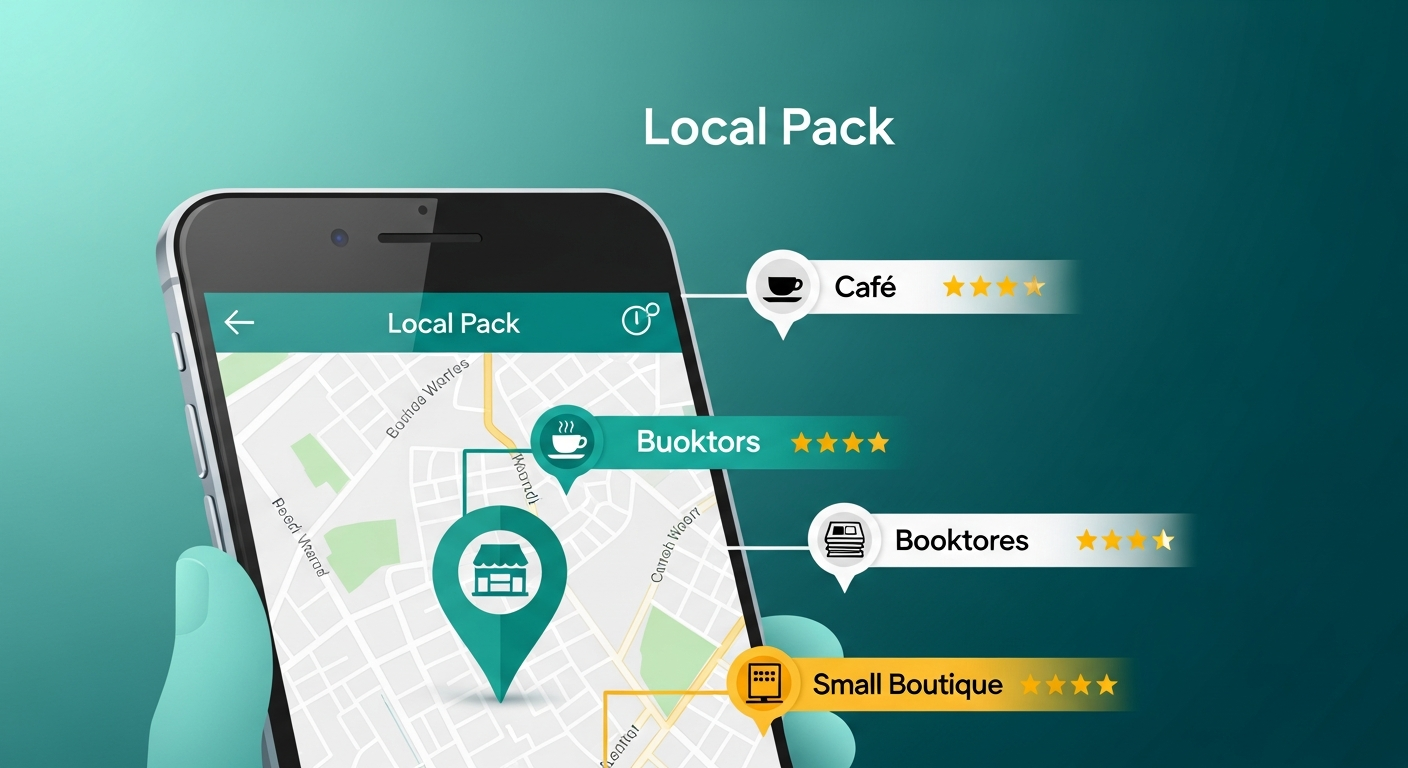
When someone searches for a service near them, Google shows a map with the top three local businesses before any other result. That block is called the Map Pack, and it captures the majority of clicks for local searches. In 2026, getting into it depends heavily on your Google reviews.
Why Google reviews are a top local ranking factor
Google's local algorithm ranks businesses on three pillars: relevance, distance, and prominence. Reviews feed directly into prominence. A profile with many recent, high-rated reviews signals to Google that your business is trusted and active, which is exactly what it wants to recommend to searchers.
Independent local SEO studies consistently place review signals among the most influential factors for the Map Pack, second only to a complete and well-optimized Google Business Profile.
The four review signals that move your ranking
- Quantity: a steady, growing number of reviews beats a one-time burst.
- Rating: an average between 4.2 and 4.9 builds trust without looking fake.
- Freshness: recent reviews matter far more than old ones, so collection must be continuous.
- Keywords: reviews that naturally mention your service and city reinforce relevance.
How to collect reviews that actually help SEO
The goal is a consistent flow of authentic reviews, not a single spike. Ask every satisfied customer right after a positive experience, when goodwill is highest. A simple QR code, SMS, or email link removes friction so more people follow through.
A review management system like Rateo automatically directs happy customers to your Google profile while capturing unhappy feedback privately. This keeps your public rating high and your review flow steady, which is exactly what the algorithm rewards.
Common mistakes that hurt local rankings
- Buying fake reviews, which Google detects and penalizes.
- Stopping collection after reaching a target, letting freshness decay.
- Ignoring reviews instead of replying, which signals an inactive profile.
- Incentivizing reviews with discounts, which violates Google's policy.
Frequently asked questions
How many Google reviews do I need to rank in the Map Pack?
There is no fixed number. What matters is having more relevant, recent, high-rated reviews than the competitors you want to outrank in your area. In most local markets, a consistent flow of a few reviews per week makes a visible difference within two to three months.
Do replies to reviews help local SEO?
Yes. Replying to reviews signals an active, engaged profile to Google and encourages more customers to leave feedback. Responding to both positive and negative reviews is a best practice.
Does a perfect 5.0 rating rank best?
Not necessarily. A flawless 5.0 with few reviews can look suspicious to both Google and customers. A high average backed by a large, growing volume of reviews is more credible and performs better.
Start collecting Google reviews on autopilot with Rateo.io and climb the Map Pack. Try it free for 14 days.